
NEWSXTRA
UN Women Calls For Strengthening Mechanisms, Policies To End Gender Violence

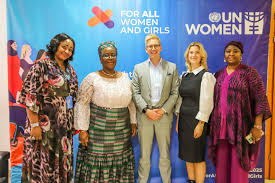
UN Women has advocated for the strengthening of mechanisms and policies towards ending gender-based violence, especially technology-facilitated abuse that increasingly threatens women.
It called on traditional rulers across Nigeria to take up the role of watchdog against the violation of gender rights in their domains, as they play custodians of culture and authority, with direct contact with the people within communities.
The advocacy was made at the National Convening of Traditional Leaders on GBV Prevention, in Abuja, as part of activities marking the 2025 16 Days of Activism Against Gender-Based Violence.
Representing the UN Women Country Representative, to Nigeria and ECOWAS, Beatrice Eyong, the Deputy Country Representative to Nigeria, Ms Patience Ekeoba, explained that with the rate at which digital spaces are becoming new avenues for violence against women, harassment, exploitation, and intimidation, there is an urgent need for everyone to contribute their quota in curbing the menace.
She noted that recent national surveys show that while progress is being made, harmful practices and physical, emotional, and sexual abuse continue to affect millions of Nigerian women.
She further called for stronger enforcement mechanisms and coordinated community action to protect survivors and deter perpetrators. stressing that the Traditional Rulers remain essential in driving collective reforms and accountability within communities.
She noted that: “The commemoration of the 16 days of activism with Traditional Rulers is therefore part of a sustained effort to reflect your positive influence in challenging and transforming cultural practices used to justify and perpetuate violence against women and cultural practices used to justify and perpetuate all forms of violence. It is also a moment to recognise your potential to drive broader women’s empowerment, peace building, and women’s political participation.
“We believe that our Traditional Rulers can lend their voice to make sure that the bill passes and women can get more seats at the National Assembly.”
She highlighted community-level success stories in Akwa Ibom, Oyo, Enugu, and Cross River States, where traditional leaders, with support from government and development partners, have abolished child marriage, widowhood rites, and female genital mutilation.
According to her, these examples prove that “cultural transformation is possible when tradition aligns with justice and human dignity. Reiterating the UN Women’s commitment towards ending Gender Based Violence.
“UN Women, together with the governments of Nigeria and partners, remain committed to supporting Traditional Rulers through technical assistance, capacity building, documentation, and a platform for coordination.
“As we continue the 16 days of activism, we really need your support to make sure that the new form of violence that we are seeing, especially around digital violence, technology-enabled violence.
We’re really hoping that you use your good office to begin to talk to our young people, even as you get back home, to ensure that they use technology properly.
So as we talk about other forms of violence, because they are important, we also want your help in making sure that people understand that technology, while it is a good tool, has also become a tool in the hands of people to pull down women, girls, boys, and men”.
On her part, Minister of Women Affairs, Imaan Suleiman Ibrahim, stressed that though Nigeria has made strides in establishing robust legal frameworks, however, legislation alone cannot enforce itself.
She stressed that for legal frameworks to translate into protection, they must be embedded within the cultural norms and community practices. This is why your leadership as traditional rulers is indispensable.
She added, “Your Majesties and Your Highnesses, Nigeria cannot defeat gender-based violence without you. You are the moral compass of our nation, the guardians of our cultural identity, and the first line of defence for the vulnerable.
“Your voices can end harmful practices, promote accountability, and create a national environment where dignity becomes the norm, and violence becomes unacceptable.”
She added that: “As we share experiences today, from kingdoms, emirates, chiefdoms, stools, and councils across our diverse nation, may our wisdom guide us toward sustainable solutions. May our actions reflect the Nigeria we aspire to build: a nation where culture pects, not harms; where leadership uplifts, not oppresses; and where every woman and girl can live free from violence.”
The Mandate Secretary of the Federal Capital Territory Administration (FCTA) Women Affairs Secretariat, Dr Adedayo Benjamins-Laniyi, said the convening offers a platform to redefine GBV at cultural, traditional, and institutional levels.
She noted that: “Traditional leaders are transformers and gatekeepers whose voices can reshape norms, strengthen family value systems, and eliminate the cultural silence that often protects perpetrators. Protecting women and girls requires a united response anchored on community accountability”.
Dr. Benjamins-Laniyi further restated FCTA’s commitment to sustaining partnerships that would prevent violence, support survivors, and enhance framework for strengthening social justice in the territory.
Also speaking, the Convener-General of the Council of Traditional Leaders in Africa (COTLA), the Emir of Shonga, Haliru Yahaya Ndanusa, reaffirmed traditional rulers’ readiness to work collectively to end harmful practices that cause physical, emotional, or digital harm.
He said: “Cultural and religious laws provide clear guidance on ending practices that cause more harm than good. The palaces can also serve as safe havens for girls facing abuse.
Traditional rulers possess influence that can swiftly change community behaviours when they speak with one voice, in discouraging child marriage, protecting survivors, and promoting responsible digital conduct among young people.”
The dialogue, with a focus on deepening commitments, sharing community-led solutions, and exploring practical pathways for sustained action, brought together traditional rulers and key stakeholders to strengthen collective efforts to end violence against women and girls.


How Ebuka Obi-Uchendu Re-Proposed To His Wife In Rome On Their Anniversary

Iyabo Ojo Reminisces On How Funke Akindele’s Mother Saved Her Children’s Lives

Omotola Ekeinde Celebrates 48th Birthday With Gratitude

Otuaro Hails Esther Matthew Tonlagha Foundation Boss On Conferment With Honorary Doctorate Degree

Bandits, States, And The Dynamics Of Illicit Economies

AFRIMA Boss Champions Pan-African Cultural Federation At Moroccan Forum

-

 EDUCATION2 months ago
Otuaro Hails Esther Matthew Tonlagha Foundation Boss On Conferment With Honorary Doctorate Degree
-
OPINION2 months ago
Bandits, States, And The Dynamics Of Illicit Economies
-
ENTERTAINMENT & CULTURE2 months ago
AFRIMA Boss Champions Pan-African Cultural Federation At Moroccan Forum
-
FOREIGN NEWS2 months ago
Nigerians In America Demand U.S. Action Against Genocide Perpetrators, Seek Accountability, FBI’s Release Of Tinubu Files
-
OPINION2 months ago
Mr. President, Enough Of The Withdrawals And Replacements
-
CRIME2 months ago
NSCDC Intercepts Human Trafficking Syndicate, Rescues 14 Egypt, Israel Bound Victims
-
ENTERTAINMENT & CULTURE2 months ago
Odo-Nla Royal House Throws Weight Behind K1 De Ultimate For Awujale Throne
-
OPINION2 months ago
How Pro-Russian, Coup-Supporting ‘Activists’ Were Exposed, Discredited
-
OPINION2 months ago
Between Imperialism And Military Rule: The Choiceless Political Reality In West Africa
-
NATIONAL NEWS2 months ago
Tinubu Hails Nigeria’s Military For Defending Democracy, Thwarting Benin Coup
-
BUSINESS & ECONOMY2 months ago
Imo State Summit 2025 Fallout: ‘I Feel Safe In Nigeria’— Boris Johnson
-
OPINION2 months ago
Insecure Remi Tinubu: Decidedly, Relentlessly Irredeemable


